|
Celebrating 34 years providing high quality products and advice.
|
| Our Local Time Is 7:41:02 AM. |
| Call us at 818-786-0600. We are here to help! |
Water Use In Tissue Cell Culture
|
 |
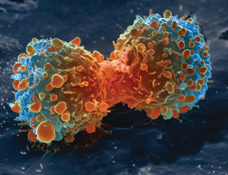
Chemotherapeutic agents used in the treatment of cancer are subjected to extensive and intensive testing. Many of these pharmaceutical compounds are being developed in government, private and university laboratories. In the early days animals were used in these testing laboratories. In an effort to reduce costs researchers began to look towards alternative methods that would provide the same accurate results. This alternative now commonly used is known as tissue cell culture. |
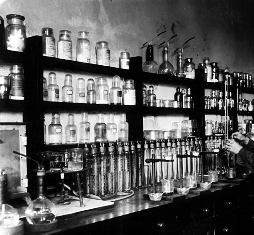
| In 1907 Ross Harrison completed the first successful experiments in tissue cell culture. He discovered through his work with maintaining frog nerve cells in a hanging drop of frog lymph that this technique ultimately led to the survival and growth of excised cells in colonies or fluid suspensions. Finally leading to the cultivation of single-cell layers used on flat surfaces such as a glass microscope slide or a beaker wall. |
 |
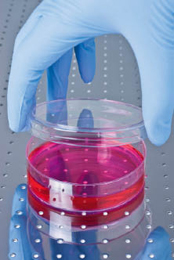
Living cells that are grown in this manner are kept immersed in a nutrient solution. This solution consists of salt glucose essential amino acids antibiotics vitamins and blood serum protein all dissolved into biopure water. Occasionally this nutrient solution is replaced to facilitate the removal of metabolic by products and to replenish the food supply.
 |
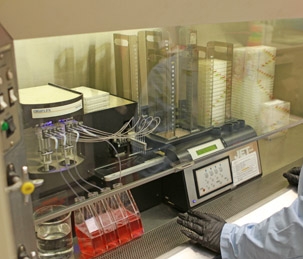
This is the technique that was used to culture human tumor cells in order to test the chemothreapeutic effects of new compounds on tumors. Usually these compounds are placed into sterile tubes and then covered with a nutrient medium that has a known suspension of tumor cells. The stoppered tubes are then incubated at 37oC.While incubating the proper pH is maintained by the combined action of NaHCO3 in the solution and metabolically produced CO2. |
| Cell growth determination after incubation is very important. Turbidimetric analysis or direct count of the number of cells present is very difficult. This is because the cells clump after they have been dislodged from the glass walls. Thus another way of measuring cell growth was developed based on the amount of protein formed. By dislodging and dissolving the cells with alkaline copper tartrate and then making a colorimetric measurement of the protein content with Folin-Ciocalteau dye reagent. The protein amounts present beforehand are taken into account when doing the final calculations. |
|
So it is very obvious that due to the exceedingly delicate practice of tissue cell cultures great care is taken to avoid introducing contaminants. One way to avoid contamination is the use of biopure water in preparation of all aqueous solutions and for the cleaning of containers, tools and instruments.
Primer: Water Use In Research And Medicine
Water The Cleansing Agent
Water Use In Tissue Cell Culture
Water Usage In Pharmaceuticals
Pyrogens In Research And Medicine
Water Use In Blood Fractionation
Water Use In Cryobiology
General Use of Water in Research and Medicine
|
|
|